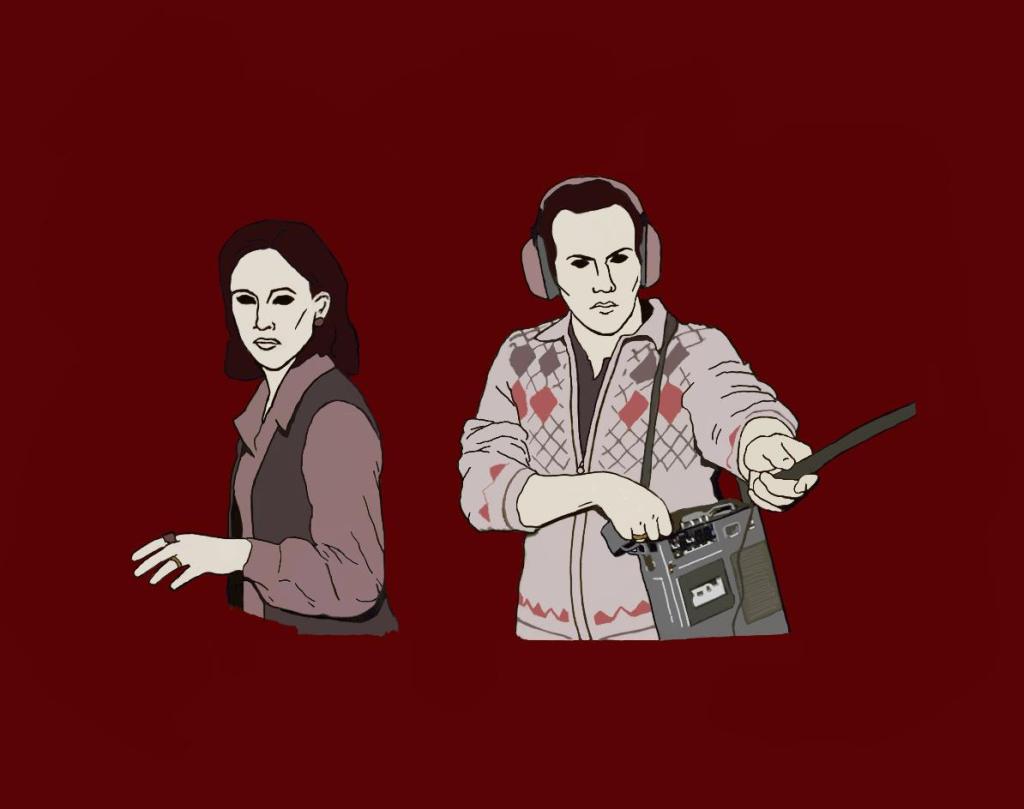
The Conjuring Franchise has always been a guilty pleasure of mine. There has always been something oddly alluring about the cursed doll of Anabelle bearing a bloody red grin; the shape of The Nun forming in the shadows of a dark abbey; a possessed child rasping in tongues while Ed Warren condemns the spirit back to hell. It’s a classic example of modern mainstream Hollywood horror.
When people learn I’m doing my PhD in horror studies, they often keenly ask me for recommendations. In blank panic, unfortunately, I forget every ‘good’ piece of horror media to ever exist. I forget my beloved Gremlins or Midsommar or The Thing. Never once have I admitted that The Conjuring has always been on my comfort list. Honestly, it’s kind of embarrassing.
It’s not the cheap jumpscares, or lacklustre storytelling. Sometimes, it’s nice to indulge in predictability. And sure, there’s the not-so-subtle message of conservatism. I can look past that, albeit grudgingly.
As a writer, the reason I feel weird about liking The Conjuring is its fabrication. Of course, no one expected Ed and Lorraine Warren – played by Patrick Wilson and Vera Farmiga – to be as perfectly vanilla as their on-screen counterparts. I’m certain most people roll their eyes as supposed demonologist Ed performs a house-shaking exorcism, whilst Lorraine has a convenient vision that reveals the last piece of the puzzle.
But who could blame Hollywood for ramping it up to make a profit? Isn’t that the crux of what horror and entertainment is all about? Profit, profit, profit. Facts go out the window when there’s an audience to entertain.
When I first became interested in horror based on ‘truth’, I tried my hand at writing my own dramatic short story based upon an alleged ‘real’ haunting. My source of inspiration was the Ancient Ram Inn in Gloucestershire, England. The Ram Inn self-proclaims to be a location of numerous historical true hauntings, presented as indisputable fact. The Inn’s website says there are Norman French records of the 800-year-old property, citing the Gloucester Records Office.
When researching, I couldn’t find any public records on the local archive database. Many websites described the Inn’s ‘true historical crimes’: a woman burned for witchcraft, a man murdered after his head was forced into the fireplace, an innkeeper’s daughter killed upstairs – if you believe hauntedrooms.com. In The Daily Mail, the former owner’s daughter, Carole Humphries, recounted “people running out of the house screaming”, stating “objects move… we used to hear the ghosts of murdered children”. Her father John told the BBC eight guests had to be exorcised.
The website boasts that the Ram Inn is built on ancient Pagan ritual grounds excavated by Bristol University. However, no academic records exist. I even contacted Dr. Stuart Prior, who is responsible for excavations in the Gloucestershire area. He said this claim is “certainly not related to any of the archeology [here]. I’ve never even heard of the Ram Inn”.
Not unlike The Conjuring stories, localised horror legends that claim to be based on truth are milked to generate profit. During my writing, I came to the conclusion that the Ram Inn’s original alleged victims cannot be vouched for. Especially thanks to questionable internet sources. Whatever the truth is in Gloucestershire, the Ram Inn still helped to inspire a (very average) short story. And it isn’t hurting anyone by claiming a spooky history.
The same cannot necessarily be said about The Conjuring. It’s not about the filmmakers ‘tricking’ the audience into thinking these events occurred. It’s not about the desire to profit from a fanciful story. Presenting ‘truth’ in film is dicey at best (where do you draw the line?). But this isn’t a criticism about cinematic accuracy.
My big issue with The Conjuring is not its extreme creative licence. The Nun II seriously goes as far to imply Lorraine Warren is a descendant of Saint Lucy. Sure, whatever. What I find uncomfortable is that The Conjuring presents the Warrens as the perfect Godly couple. In reality, they were crooks taking advantage of vulnerable people.
The latest instalment of the franchise, The Conjuring: The Devil Made Me Do It (2021), covers the trial of Arne Johnson. In 1981, the Warrens did try and get off a man convicted of manslaughter by using demonic possession as a defence. Although an interesting premise for a movie, The Conjuring unquestionably excuses Johnson’s actions by literally presenting ‘the devil made me do it’ argument. The Conjuring and The Conjuring 2 merely follow ghostly hauntings; the third film takes it one step further by disrespecting a real victim, Johnson’s landlord Alan Bono.
When I researched the Ancient Ram Inn, it seemed that the ghosts were so far back in history that no one knew the whole story anymore. Perhaps now, you can just claim anything. Unlike the Inn, The Conjuring films take place between the 1970s-1980s. It’s recent enough that we can decisively analyse the erasure of the ugly truth.
Ed and Lorraine Warren were terrible people that should not be given grace. They conducted paranormal investigations to scam people by citing false ‘scientific methods’. Ed had an affair with a girl who was only fifteen. Allegedly, Lorraine encouraged the girl to have an abortion (resulting from her relationship with Ed) to protect the Warrens’ reputation. There was also alleged domestic violence in the family.
The Conjuring has contributed a false legacy. For a couple so devoted to Catholicism and denouncing evil, the Warrens had no problem profiting from fake science and baseless clairvoyance. Meanwhile, they were supposedly engaging in domestic abuse and pedophilia. It is clear from any basic Google search that the Warrens were not even close to the wholesome power couple we see on screen.
For anyone writing about horror “based on a true story”, I encourage you to think about The Conjuring as an example of how storytelling can be harmful. Very few people believe in an exaggerated – well, downright invented – ghost story. Especially when you swear it really happened. Deep down, the audience knows the writing is for profit and entertainment. Even my silly little Ram Inn story was mostly fictitious, despite all that research.
When depicting real subjects, writers have a responsibility to be considerate when real victims are involved. On top of that, it should go without saying that it’s in poor taste to glorify dreadful people, criminals, and/or con artists. Shamefully – although I like to flick it on for an easy watch – The Conjuring contributes to the problematic legacy of the Warrens as heroes against the horrors.




 Charlotte Elliott
Leave a comment